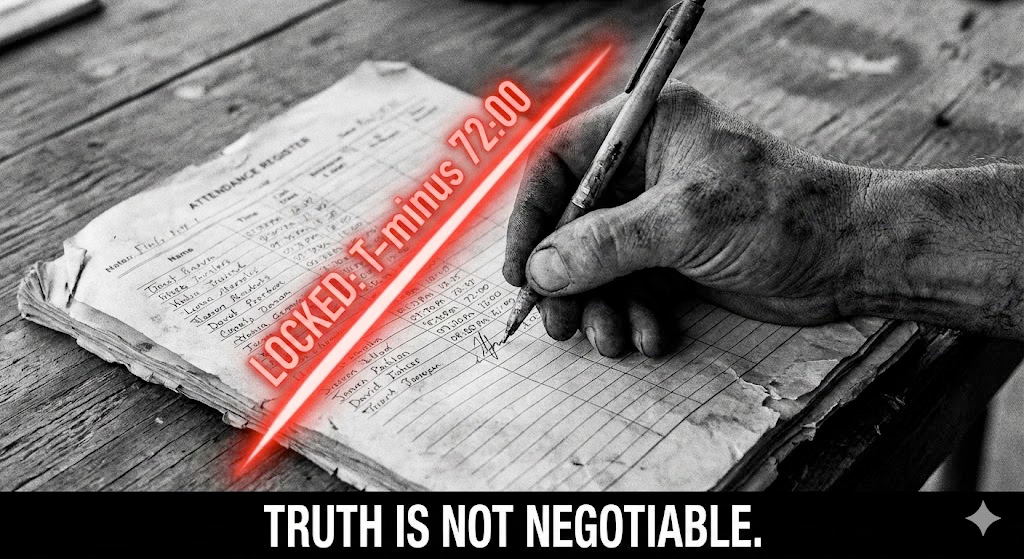
Every service business eventually runs into the same fight. Not with customers, not with employees — but with the past.
Someone claims attendance was missed. Someone else says it was paid correctly. The system says one thing. The field says another. By the time the argument starts, the money is already gone.
The question is not who is right. The question is who has authority.
How Truth Works Today (Whether We Admit It or Not)
In our business, attendance disputes are not philosophical debates. They are cash decisions.
So we follow one rule: once attendance is approved by the customer and invoiced, that is the truth. Not because it is perfect. Because it is paid.
If a field officer raises an alternate claim later, the answer is simple: that window is closed. If the error is critical, we do not rewrite history. We create a second reality — a fresh attendance sheet, explicit customer approval, and a separate invoice.
This is not flexibility. This is containment.
The Actual Truth Stack (Messy, Human, Real)
Today, truth lives in multiple places: paper attendance registers at site, WhatsApp messages, Excel and payroll records, human memory, and customer-signed monthly sheets. When these disagree, the office version wins — because that is what gets signed and paid.
Most conflicts do not come from fraud. They come from lack of visibility. Field staff do not see the final picture. They assume. They remember incorrectly. By the time they notice, the system has already moved on.
The most common explanations for missing data are that someone forgot to sign, that someone else came for a few days, or that nobody explained the process. These explanations allow the business to believe something dangerous: that accountability can be retroactive. It cannot.
What O9X Changes (The Line in the Sand)
O9X introduces one hard rule and one controlled escape hatch.
The hard rule is this: attendance entered by field staff becomes the primary record. They can see all attendance. They can submit entries for all associates. They can edit for a fixed window of three days. After that, attendance is frozen.
The escape hatch works like this: after three days, field staff can request changes, but only office staff can execute them. Every change leaves a permanent trace. No silent edits. No memory-based corrections. No archaeology through WhatsApp threads.
Why This Mix of Rigidity and Flexibility Matters
Total rigidity breaks operations. Total flexibility breaks trust.
This structure does something deliberate. It gives field staff visibility. It gives them time-bound control. It forces accountability before money moves. After that point, the system stops negotiating with the past.
The real change is about authority. Before O9X, truth was decided by payroll data reconstructed from multiple sources after the fact. After O9X, truth is decided by what was entered while it was still editable. That is the only moment where correction is allowed. Everything else is escalation, not editing.
Who This Is Not For
This field note is not for founders who want systems that adjust later. If your business survives on explanations instead of records, stop here.
This only matters if attendance drives invoices, if errors cost real money, and if you are tired of relitigating last month’s disputes.
The Law This System Is Built On
The problem is not that people make mistakes. The problem is that the system allows those mistakes to be contested after the money has moved. O9X does not make people perfect. It makes reality visible early — so mistakes get corrected when they are still cheap.
Everything else in the build sits on top of this decision.