One of the smallest decisions in my business happens under the most pressure. A guard does not show up. A warehouse shift runs short. A housekeeping post goes uncovered. Someone must be assigned for overtime. Fast.
On paper this looks trivial. In reality it is where money, safety, and trust quietly leak. We run security, housekeeping, and warehouse operations. These are physically demanding roles. You cannot push people past their limit. No one works well after 24 continuous hours. At 36 hours, mistakes are not edge cases — they are guaranteed.
And yet this decision gets made every day.
The Decision Everyone Underestimates
When an associate is absent, supervisors must decide who fills in. The constraints are clear: no more than 24 continuous hours, no more than 5 overtime assignments in a rolling 30-day window, and attendance-based billing means an empty post equals immediate revenue loss.
Most of the time, supervisors get it right. Occasionally they do not. When they fail, we lose revenue for that shift, clients question our reliability, and overworked staff make errors that cost far more than the overtime itself.
Earlier, we absorbed these failures quietly. Sometimes payroll caught them. Sometimes clients escalated. Sometimes we only noticed when performance dropped. The assumption holding everything together was simple: supervisors know their people, and even if things get messy, they will manage.
That assumption worked — until I tried to automate.
What Automation Got Right, and Still Broke
I built a system to help with overtime assignment. It did exactly what I asked: pulled attendance records, enforced engagement limits, and flagged who was eligible.
On paper it was correct. In practice, it was not.
The system would suggest person A or B. Supervisors kept picking person D. Why? Because D knew the site, the client, the routine, and the failure modes. The system respected contracts. Humans respected continuity.
Here is where it broke quietly. Supervisors kept choosing D, but the system never tracked what happened next. When D’s original shift came up, replacements were rushed. Sometimes forgotten. Sometimes wrong. D ended up working 36 hours, and nobody caught it until it was too late.
The system did not fail. It worked exactly as designed. I had automated the wrong layer.
The Repricing Moment
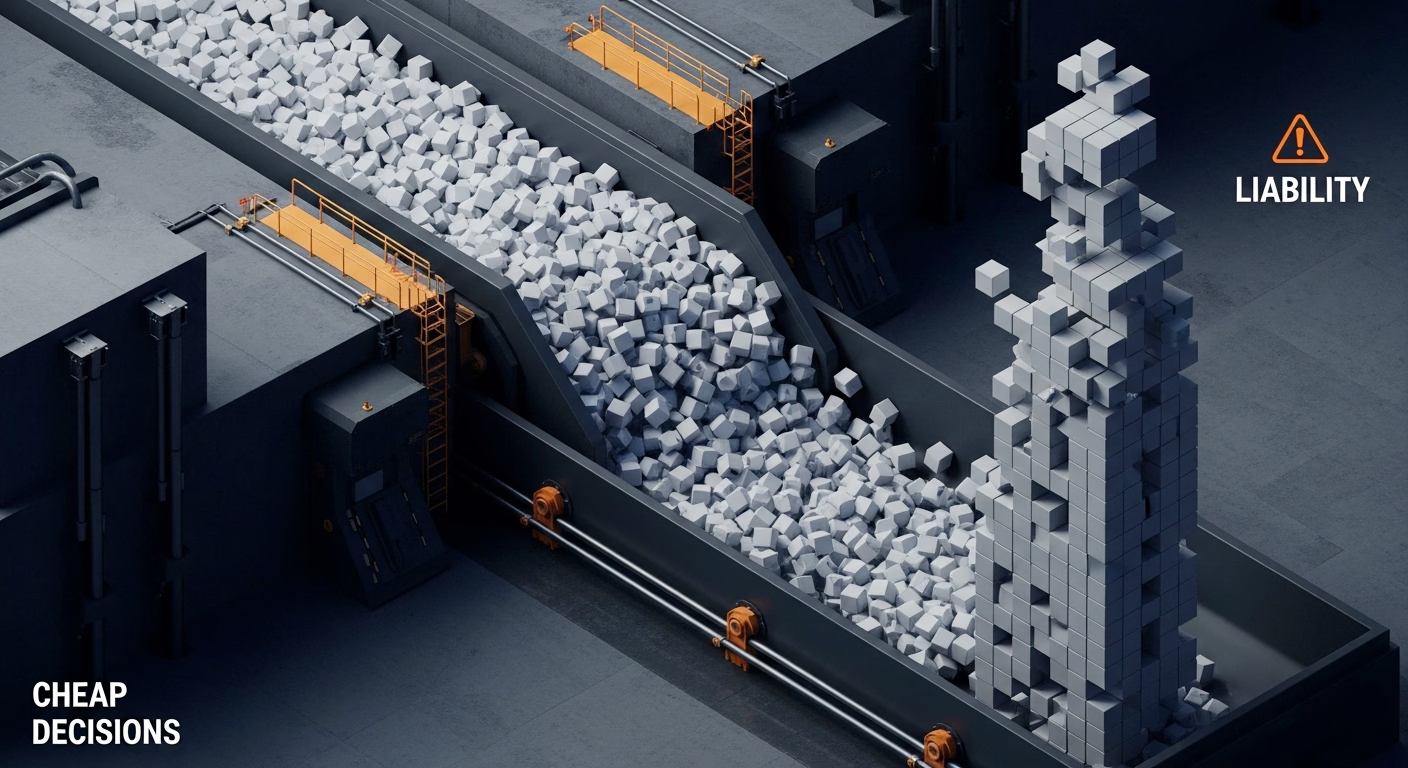
AI did not make overtime assignment cheaper. It made the cost of a bad assignment more expensive.
When the right person was not chosen, supervisors spent time training someone unfamiliar with the site. Mistakes increased during short assignments. Fatigue costs moved from scheduling into execution, where they were harder to see and harder to fix.
The decision did not disappear. Its cost moved downstream. This is what AI does in operations-heavy businesses. It collapses decision time. But it raises the price of being wrong.
Where Ownership Actually Lives
Before automation, supervisors decided, the company absorbed the damage, and errors surfaced late. After automation done correctly, the system owns eligibility, humans own selection, responsibility is explicit, and failures surface early.
We stopped trying to decide who should work. The system now answers only one question: who cannot work? Everything else stays with the supervisor.
The Operator Rule
In operations-heavy businesses, AI should never decide who works where. It should only show who cannot.
AI does not remove judgment. It reprices it. If you do not choose that price deliberately, you will pay it where it hurts most — on the ground, under pressure, when recovery is already expensive.