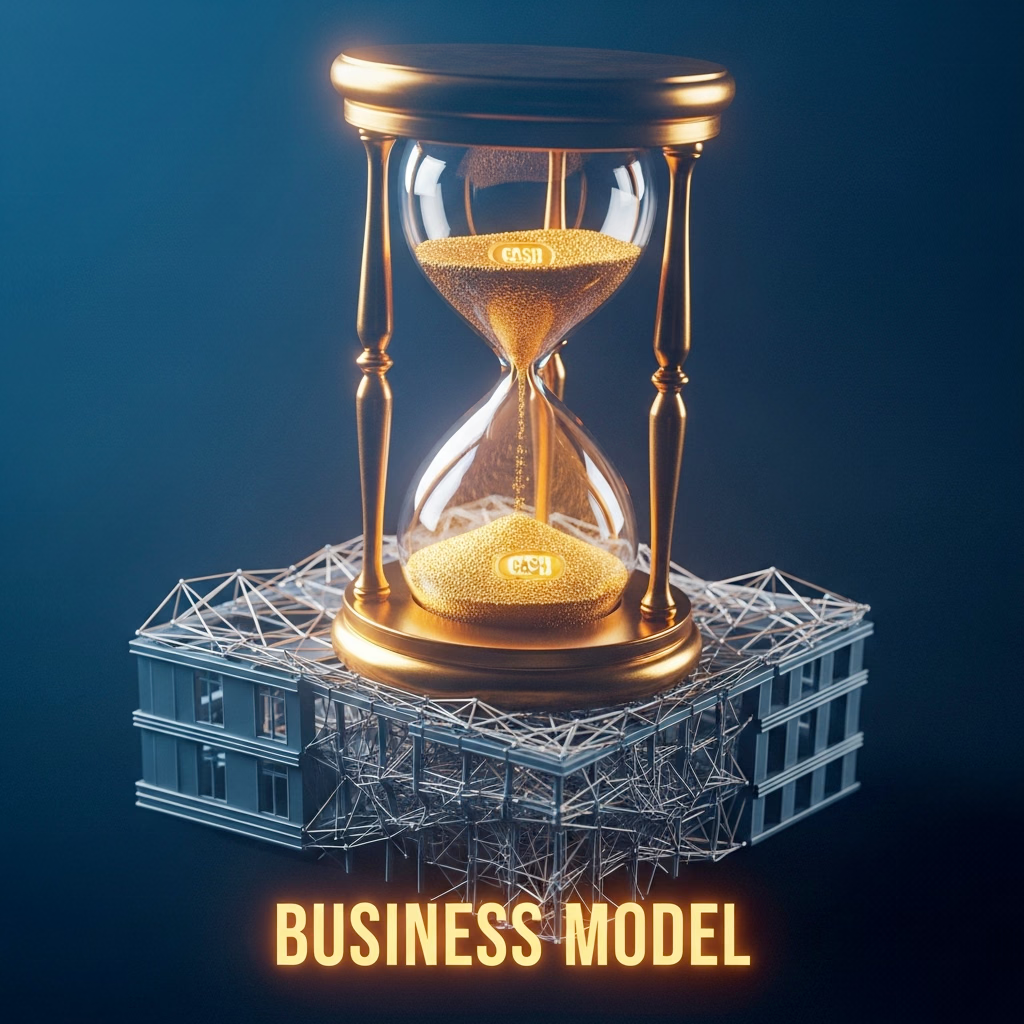
The hardest deals to walk away from are not the bad ones. They are the big ones. The ones that look like progress. The ones that show up as revenue spikes on dashboards. The ones that make you feel irresponsible for even questioning them.
The illusion that trapped me the longest was simple: this revenue is too big to walk away from. That belief almost cost me the business.
The Slow Bleed Is the Most Dangerous Failure Mode
Founders fear sudden disasters. A customer defaults. A partner vanishes. A payment does not arrive. Those are visible collisions. You react, you cut, you survive.
The real danger is quieter. The slow bleed looks like stable revenue, acceptable margins that shrink month by month, growing operations that steadily increase your costs, and a cash balance that is slightly worse every month. No alarms. No panic. Just less room to move. That is gravity.
When Revenue Increases Pressure
In 2021, I walked away from Rs 48 lakhs in monthly revenue — Rs 5.76 crores a year. About 20% of my business at the time.
On paper it looked irrational. The client served a government agency. The volume was large. The optics were good. Then the renewal terms arrived: service fee cut from 5% to 3%, payment terms extended from 45 days to 60.
I opened my spreadsheet and looked at cash, not profit. Service fee: Rs 2.4 lakhs. Direct overheads: Rs 1.0 lakh. Working capital locked: Rs 72 lakhs. Interest cost: Rs 75,000. TDS deduction: Rs 96,000. Net monthly cash flow: minus Rs 31,000.
The books showed an 8.4% return. The bank account showed a bleed. I was not running a business. I was slowly financing theirs.
Profit Is a Statement. Cash Is a Force.
Profit describes what should happen over time. Cash determines whether you live long enough for time to matter.
This is the mistake most founders make. We model margins, unit economics, and eventual profitability. But we ignore the cost of waiting. Waiting requires cash. If cash exits faster than your ability to correct, the business fractures — even if the model is sound.
Why Big Revenue Is So Hard to Kill
Small bad deals are easy to drop. Big deals are not. They carry prestige, team morale, market signalling, and the fear of explaining a decline. So founders reinterpret the bleed: once scale kicks in, this improves; this client anchors the business; we cannot afford to lose this. That is not analysis. That is loss aversion wearing the clothes of a plan. Gravity does not care.
The Recovery Window
I once turned down Rs 17 lakhs in monthly revenue. At the same time, I accepted a Rs 9 lakh expansion from an existing client.
The Rs 17 lakh deal had high margins, supposedly fast payments, and no negotiation. It arrived fully formed, with no pilot and no history. That alone made me uneasy. I asked myself one question: if one month fails, how long does it take to recover?
The answer was over a year of perfect execution. I passed.
Three months later, that customer declared bankruptcy. The vendor who took the deal was left with a Rs 16 lakh payroll hole. That was not bad luck. That was physics.
Three Tests That Replace Hope
If you want to survive slow bleeds, stop debating and start measuring.
The first is the monthly cash test. At the end of every month, ask: is my cash position better than it was at the start? If not, growth is cosmetic.
The second is the recovery window. If one month of revenue disappears, how many months of perfect execution does it take to get back to zero? If the answer is more than six months, you are gambling, not building.
The third is the index fund test. Calculate true return on investment: net cash profit divided by working capital deployed. If a client yields less than a Nifty index fund and demands your attention, you are subsidising someone else’s business. Exit the contract.
Capital Does Not Remove Gravity
Capital only changes when gravity shows up. Bootstrapping exposes mistakes early, and corrections are still possible. Bank capital enforces discipline — interest does not negotiate. External capital delays the truth. When it runs out, the options are gone. Cash timing decides survivability in all three cases.
The Law
A business does not die when margins are bad. It dies when cash leaves faster than time allows correction.
Revenue is not safety. Profit is not survival. Cash timing is gravity. If your biggest deal is making it harder to breathe, it is already killing you — just slowly enough to feel normal.