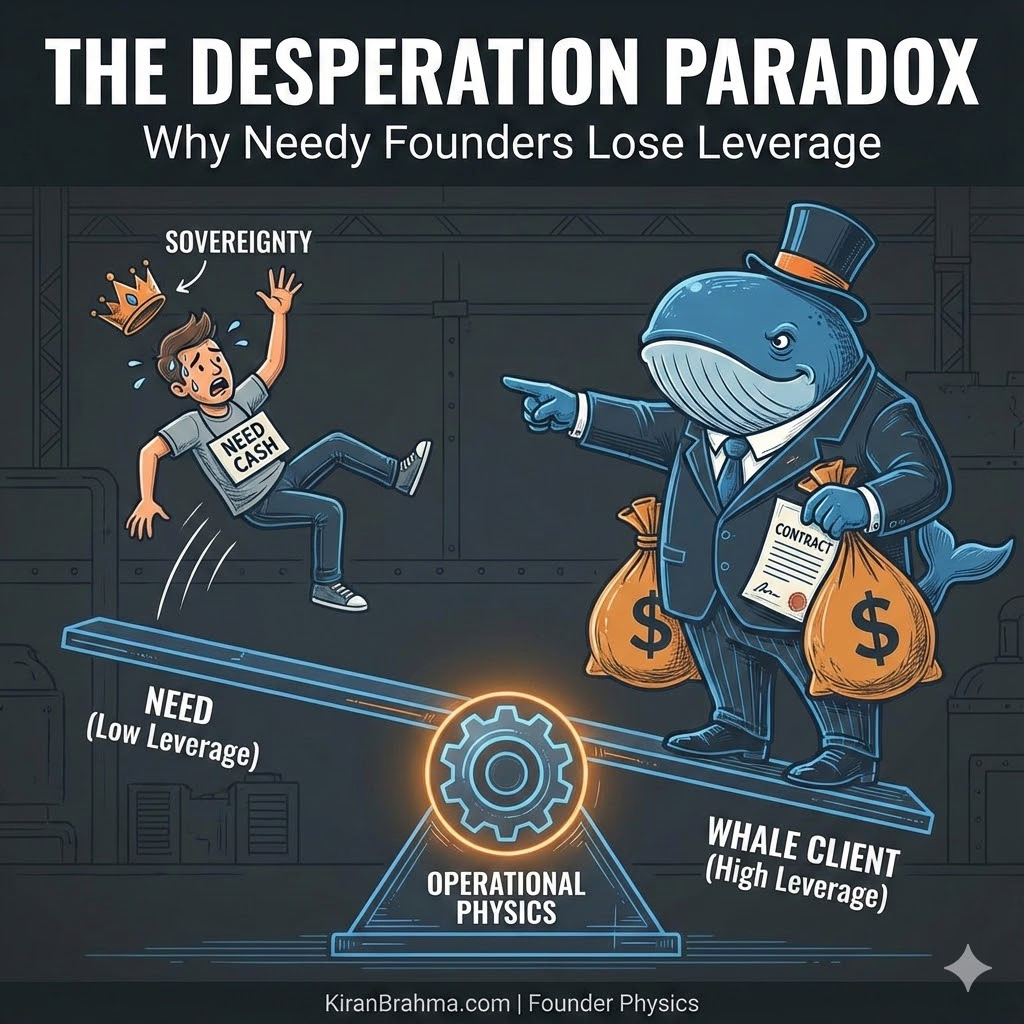
Desperation has a specific smell.
In the early days when my dad was building his security business, he walked into client meetings radiating it. He needed the cash flow. He needed the logo on his deck. He needed the validation. The client always sensed it. And because they sensed it, they owned him before he even opened his mouth.
When you are bootstrapping, sales is not about persuasion. It is about physics. If you lean too hard on need, you lose your centre of gravity — your leverage.
I studied the sales philosophy of David Ogilvy recently. Most people read him for copywriting, but his real value is in understanding the mechanics of how agencies win and lose. He built a set of principles that translate cleanly to anyone building a business from scratch. Here is how I have applied them.
The Sport of Detachment
When you treat a deal as life or death, your cortisol spikes. You talk too much. You promise things you have not built. You act like a vendor begging for a chance, not a partner being considered.
Ogilvy advised treating the hunt for new clients as a sport. If you win, you eat. If you lose, you learn the gap in your armour. You do not bleed over it.
When I stopped trying to close and started trying to diagnose — asking what the client actually needed and whether I could genuinely provide it — my conversion rate improved. Clients trust a doctor. They dismiss a beggar.
The Suicide Pact (The 30% Rule)
If one client makes up 50% of your revenue, you do not own a business. You are an undeclared employee with no benefits and high liability. When you cannot afford to say no, you cannot give honest advice. You become a yes-man. And in the operations grind, yes-men get crushed by scope creep.
The threshold I watch: if a single client represents more than 30% of revenue, I am in a danger zone. Early survival contracts can push past that threshold and there is nothing wrong with using them to keep the lights on. My current business was built on exactly those contracts. The danger is treating them as your permanent model rather than temporary shelter. Use them as a bridge, not a foundation.
The Velvet Rope
When we start a business, we think selectivity is arrogance. We will take anyone who pays.
That thinking kills operations fast. A bad client does not just pay you money — they tax your attention. They generate 80% of your support work while paying 20% of your margins. They are entropy in human form.
Ogilvy took deliberate care in selecting clients because he understood that bad clients clog the machinery. Over the past five years I have built simple filters into my intake process. I ask three questions: does this client’s revenue quality justify the complexity they bring? Do they respect the system, or will they constantly want exceptions? Is their problem something I can actually solve with my specific skills? If any answer is no, I quote a rate that makes the economics clear and point them toward someone better suited.
The Purge (Fire to Survive)
Fire clients five times more than they fire you.
That is the hardest thing for any new founder to hear. We are conditioned to hold onto revenue. But a toxic client is an infection. They demoralise your staff, force you to build special processes that break your standard operating procedures, and cost you people who are harder to replace than the revenue.
I once fired a client paying Rs 1.5 lakhs a month because their emergency calls were burning out my site supervisor. Short term, I lost revenue. Long term, I kept my employee, stabilised operations, and found clients I could serve with far better efficiency. The maths always works out when you run the full calculation, not just the top-line number.
The Physics of Trust
In a market full of big claims and AI-powered everything, stating your limitations honestly is the one move that stands out. Ogilvy’s rule was simple: tell them your flaws.
Do not sell perfection. Tell them how much you charge, how your service system works, and what your payment terms are. Lay it out plainly. The wrong clients will leave. Good. The right clients — the ones who value clarity over promises — will sign.
The Audit
Sovereignty is not given. It is engineered.
Look at your client roster today. Identify the whale that owns you and the client that drains your team. Draft the plan to replace both before they force the decision on you.