In 2022, I lost Rs 90,125 in about thirty seconds. Not to a bad market call or a failed product. I lost it because a bank changed a policy I had no say in.
A friend needed 65 laptops at Rs 35,000 a unit. I spotted what looked like a clean arbitrage: Amazon ICICI credit card, 5% cashback. My math said I would clear Rs 1,13,750 on a single order for essentially zero work. I did not bother verifying the wholesale rates because I thought the margins were already locked in.
The first batch of 20 units went through without a problem. Then the bank called. Bulk commercial purchase, they said. Card benefits blocked. Card cancelled.
Expected profit: Rs 1,13,750. Actual profit: Rs 23,625.
That gap — Rs 90,125 — is the exact amount it cost me to learn the difference between a business and a position that depends on someone else’s permission to exist.
What I Was Actually Doing
I was not building a business. I was renting a margin from a bank and hoping the bank would not notice. The moment they noticed, I had nothing. No product, no process, no capability. Just a gap between two prices that a third party had decided to close.
Once I saw the shape of that mistake, I could not stop seeing it everywhere.
The developer I hired to customise ERPNext quoted a low price because he did not own a team. He rented freelancers. The moment the project got complicated, the freelancers disappeared and he had nothing to deliver. He was arbitrage in human form — selling a capability he did not control.
Micromax built a dominant position in Indian mobile phones by importing Chinese hardware, rebranding it, and selling at a premium. For a few years it worked. Then Xiaomi decided to enter the Indian market directly and cut out the middle step entirely. Micromax had no manufacturing, no software, no brand loyalty that could survive a price war with the original supplier. The trader became irrelevant the day the supplier no longer needed him.
boAt posted a Rs 60 crore profit in 2025 while revenue stayed flat and wearables revenue fell 40%. The profit came from buying 9% less inventory. That is not operational improvement. That is a company conserving cash because it does not trust its own growth. The founders had already sold Rs 225 crore in shares through an offer for sale before the IPO. When founders sell before the listing, they are usually telling you something about the ceiling they can see from where they are standing.
The pattern across all three is the same. Revenue built on a capability you do not own will generate margin until the owner of that capability either raises the price, enters your market, or simply stops cooperating.
The Structural Problem With Arbitrage
Arbitrage looks like a business because it generates revenue. It produces cash flow. It can scale quickly. But it is fragile in a way that genuine capability is not, because the thing you are selling is not yours.
There are two kinds of value creation. The first is renting value from someone else — a bank policy, a supplier’s price gap, a freelancer’s temporary availability — and passing it on at a markup. The second is building value yourself — a process, a team, a product, a body of knowledge — that others cannot replicate without doing the same work you did.
The first kind is faster to start. The second kind is the only one that compounds.
Arbitrage is not stupid. In the early phase of any business, it is a legitimate way to test whether demand exists before you invest in building the real thing. If you want to know whether a laptop reselling business has a market, running a small arbitrage operation to find out makes sense. Dropshipping to validate a brand concept before building inventory makes sense. Using someone else’s infrastructure while you are still figuring out whether the problem is real makes sense.
The trap is staying there. Most of the founders I have watched get addicted to Phase 1 margins and never make the move to Phase 2. The margins feel clean. The capital requirements stay low. The complexity stays manageable. And then one day the bank calls, or the supplier enters the market, or the platform changes its algorithm, and the whole thing unravels.
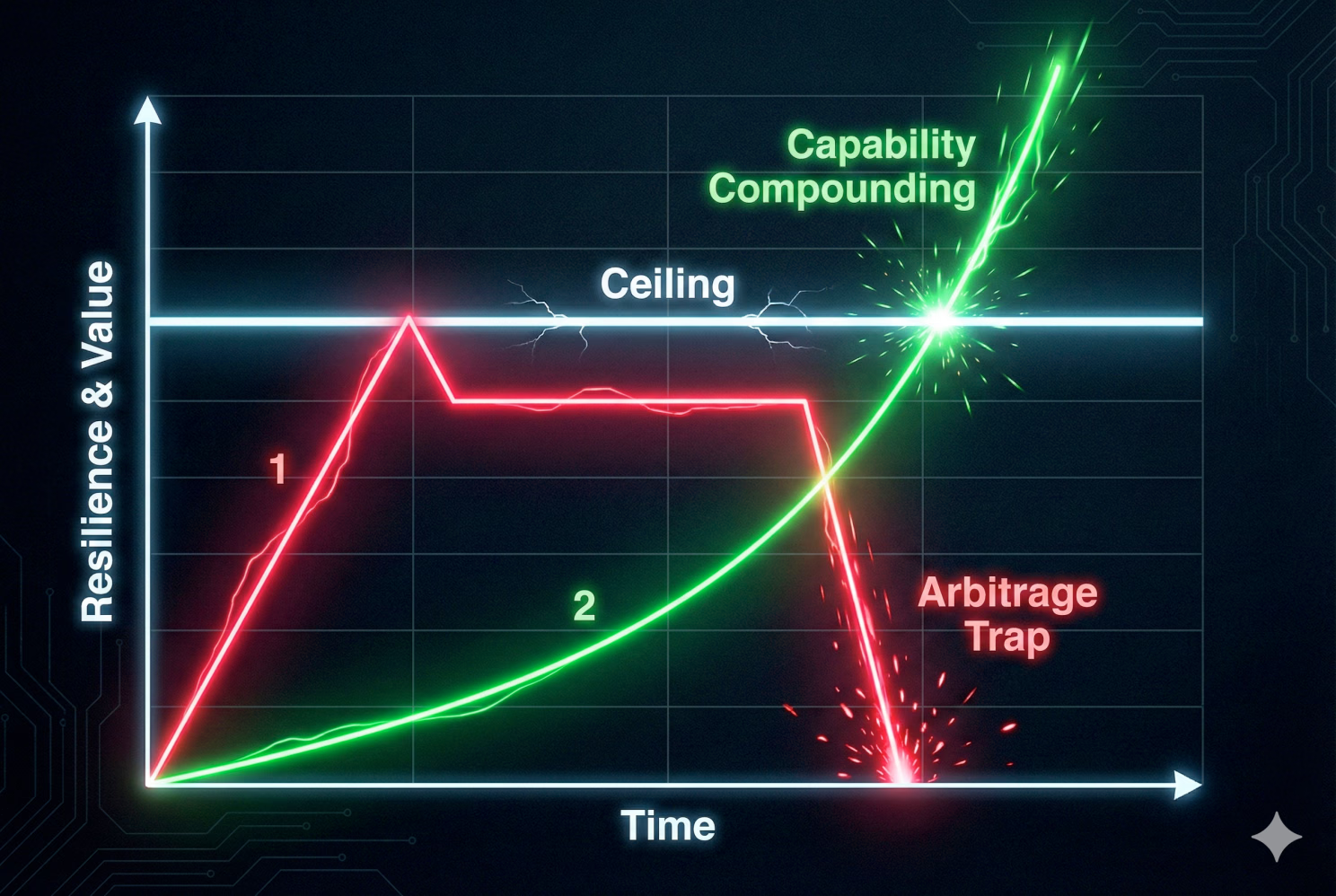
The rule I have locked in since that Rs 90,125 lesson: never build a core business function on a rented capability. Use arbitrage to validate. Then bring the capability in-house before the owner of that capability realises they do not need you.
How I Check My Own Business Now
I run three questions on any revenue stream before I decide whether to invest in it further.
The first is the replication test. Can someone copy this with one search or one prompt? If yes, the margin is temporary. It will compress the moment enough people see the same gap. This catches a lot of what passes for AI business models right now — tools built entirely from prompts shared online, reselling access to APIs with a thin interface on top. That is not a product. That is a position that will close.
The second is the supplier test. If my primary supplier or platform changed their policy today, would the business break? When the answer is yes, I have a capability gap. The Rs 90,125 lesson is the answer to that question in my own history. I answered it wrong.
The third is the value test. What do I add that cannot be copied in 24 hours? If the honest answer is nothing, I am exit liquidity for whoever owns the capability I am renting. At some point they will either charge more for it or cut me out entirely.
These questions are not a framework for other people. They are the specific scar tissue from a specific mistake. I run them because ignoring them costs money.
The Difference That Matters
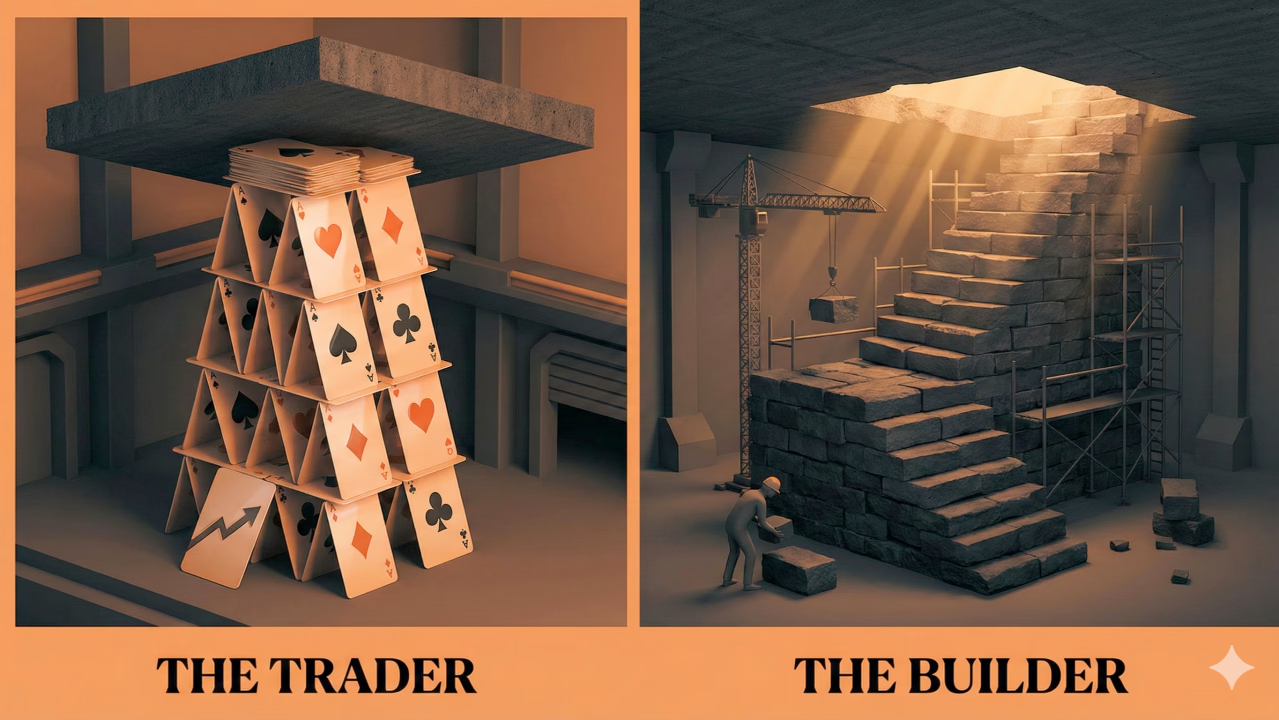
The trader depends on market conditions staying exactly as they are. The builder forces the market to accommodate what they have built.
Micromax depended on Xiaomi staying in China. My laptop arbitrage depended on the bank not reading its own terms and conditions. The ERP developer depended on the same three freelancers being available every month.
None of those conditions were under anyone’s control. That is the ceiling — not a limit on ambition or effort, but a structural boundary that comes from building on a foundation you do not own.
I am still figuring out exactly where that line sits in some parts of my current work. There are places where I am probably still renting more than I should. But I at least know what the question is now, which is more than I knew before the bank called.