
I spent years falling into what I now call Decision Blur. During my time at Ola, the CEO recommended reading the “Speed as a Habit” article. The message was clear: decide faster, hire faster, commit to timelines before you have verified they are possible.
I thought I was being a leader. In reality, I was increasing my time at risk.
The Construction Scar
Before I started managing my current business or building O9X, I spent four years in large-scale construction. Delhi T3. One hundred and fifty kilometres of highway. In that world, an act-fast error in a bridge design is not a bug. It is a catastrophe. Crores of rupees disappear and people die.
What I learned there is that speed on those projects did not come from moving fast on the ground. It came from the dry run — designers spending hours in CAD, engineers spending weeks in planning, before a single bag of cement arrived on site.
When I took over my current business, I saw the opposite pattern in myself. I made quick decisions, then spent months in slow execution because I was cleaning up the mess the original decision had made. Real speed is the compression of the execution window, not the decision window.
The Execution Exposure Trap
Execution is expensive. Planning is cheap.
The moment I move from thinking to executing, I create exposure. I am now spending money, reputation, and team morale. My current work is more reversible than pouring cement, but high-stakes moves like hiring or repricing carry heavy unwinding costs.
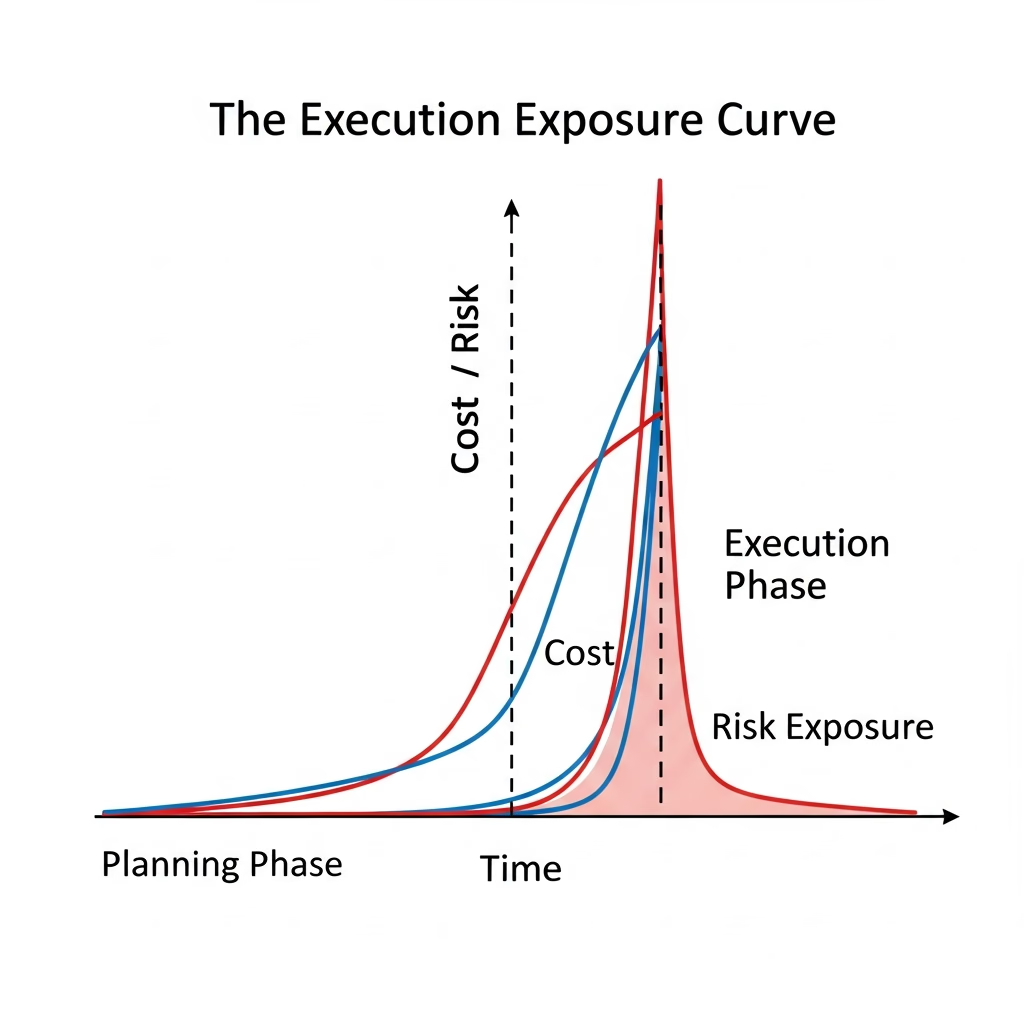
My planning mistakes cost me a few hours of sleep and some AI prompts. My execution mistakes have cost me Rs 2 lakhs in penalties and months of rework on a single contract.
Last year I read “How Big Things Get Done”. The core argument confirmed what I had learned in construction: invest heavily in the low-cost planning phase to reduce errors in the high-cost execution phase. I have been applying that deliberately ever since.
My Mechanism: Simulated Execution
I do not treat thinking slow as reflection. To me, it is a dry run.
When I build a new feature for O9X or hire a manager for a Rs 10 lakh contract, I do not start and see what happens. I spend a focused window — usually one to two days — in a dark room with my data, using AI to pressure-test my thinking.
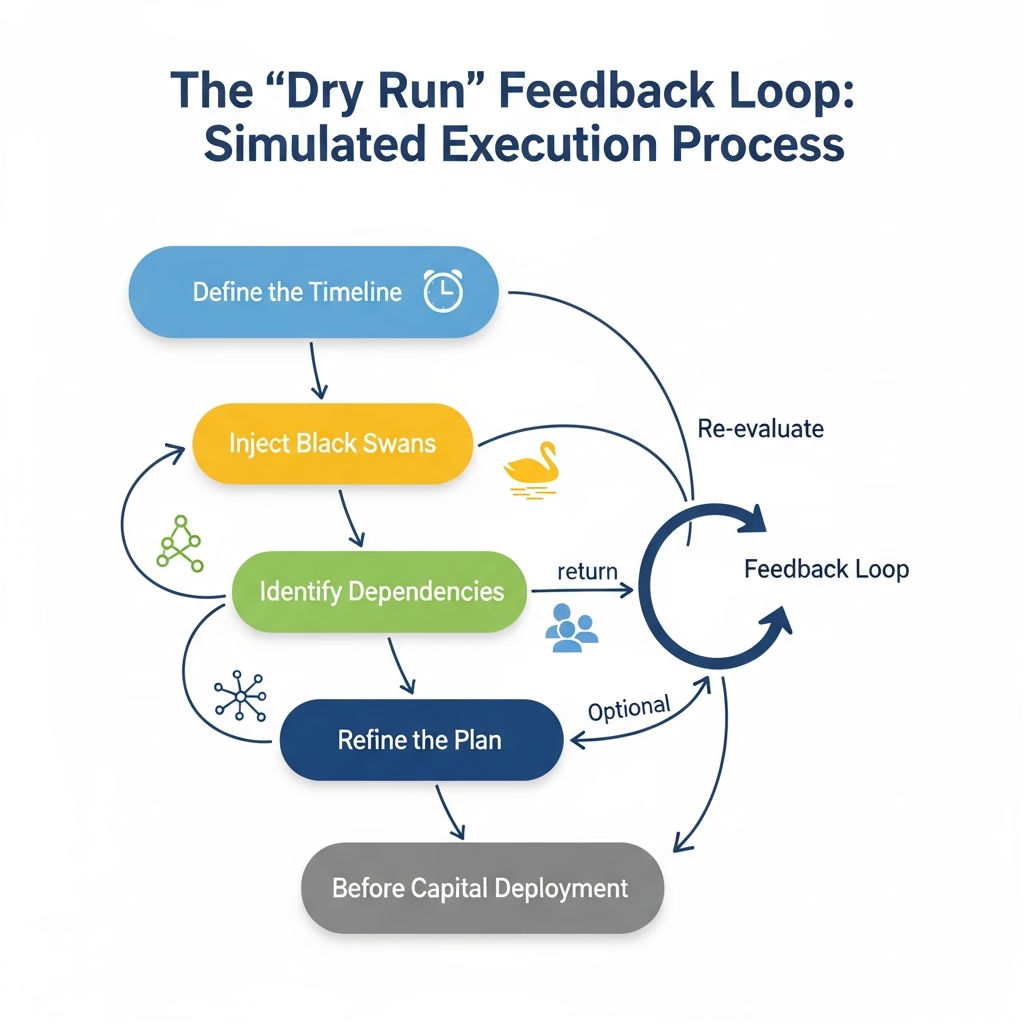
I simulate the friction before I spend the capital. I write out every day of the next 90 days of the project. Then I introduce the worst cases: if my new hire discovers corrupted data on day 45, what happens to the system? I look for the single dependency that stops the project if one person gets sick or one tool fails. If I cannot survive the simulation, I know I will not survive the execution.
My Planning Budget
I do not plan a tweet. But I will not just start a new service line without structured thinking. Here is the heuristic I use to determine how long to stay slow. For projects with estimated risk between Rs 50,000 and Rs 2 lakhs, I take one to two days: solo dark room simulation with an AI audit. For Rs 2 lakhs to Rs 10 lakhs, I take one week: three expert calls plus a throwaway crude prototype. For anything above Rs 10 lakhs or that is hard to reverse, I take two to three weeks: full system design plus a ten-day shadow execution run.
The Binary Cleave: Reversibility
I only apply think-slow to one-way doors.
One-way doors are decisions I cannot easily undo: hiring, changing pricing, signing a lease, building custom software. For these, I force myself to spend at least a week trying to kill the idea before I commit to it.
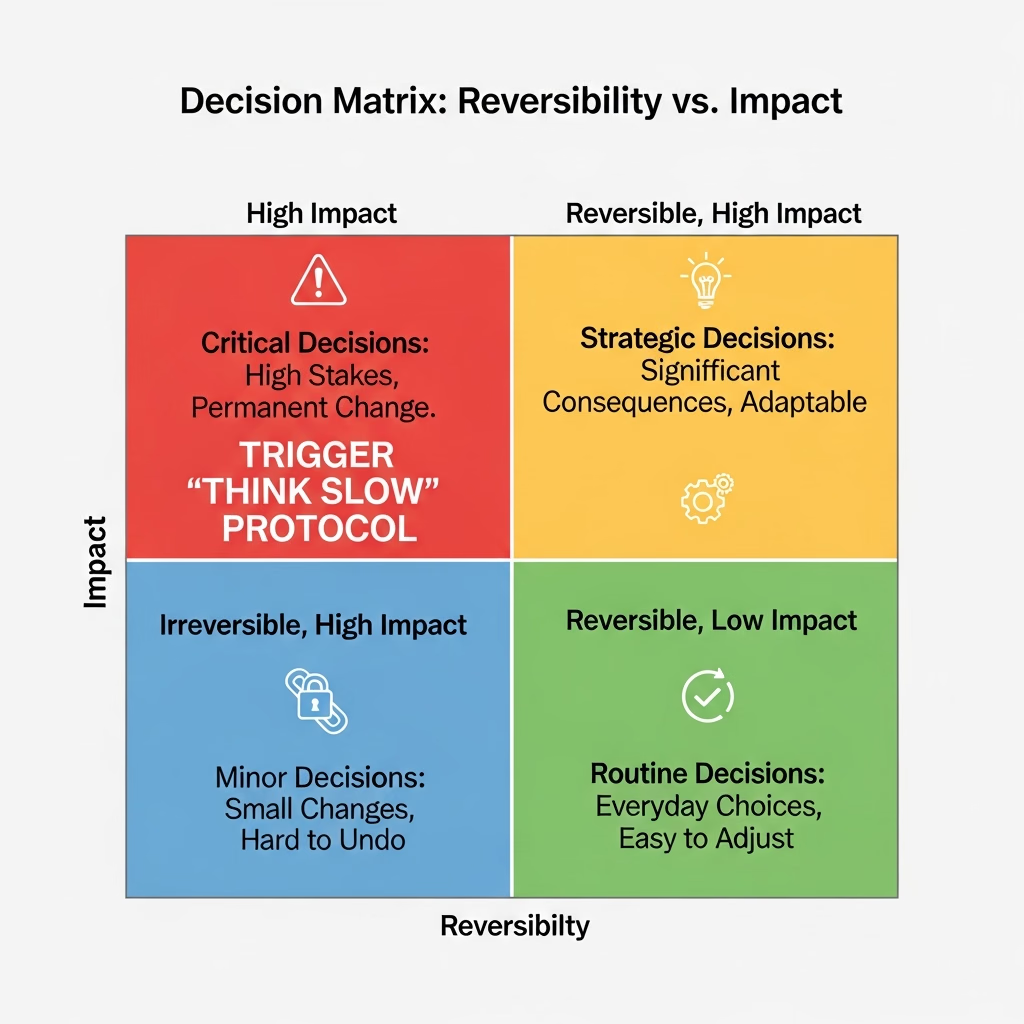
Two-way doors I move through quickly: sales outreach, content, testing a new software tool. If I can reverse it in a week with no meaningful cost, I act fast and learn from the result.
The Cost of Getting It Wrong
The most damaging pattern I have lived through is decide fast, execute slow. I would commit to a client in 20 minutes, then spend six months struggling to deliver. I had maximised my exposure. I was at risk for 180 days.
I am comfortable looking slow now. I ask too many questions. I delay the start. I look like I am not moving.
But once I commit, the uncertainty is gone. I finish in 30 days what takes a fast-decider nine months. Speed is not a habit I adopted. It is a capability I earned by slowing down until the path was clear.